Most homeowners and business owners think about their HVAC system exactly twice a year—when they change the filters and when the utility bill looks too high. But there’s a third moment that matters just as much, and most people skip it entirely: professional air duct cleaning. Out of sight, out of mind, right? The problem is that what lives inside your ductwork doesn’t stay there. It circulates through every room, every hour, every day.
Here’s what you need to know—including the honest answer to how often duct cleaning is actually necessary, what it involves, and what the real cost of skipping it looks like over time.
What Is HVAC Air Duct Cleaning, Exactly?
HVAC air duct cleaning is the process of removing accumulated dust, debris, allergens, mold spores, pet dander, and other contaminants from your heating and cooling system’s ductwork. A professional service doesn’t just vacuum the grilles—it uses industrial-grade equipment to clean the entire system, including
Supply and return air ducts
Registers and grilles
Heat exchangers and cooling coils
Drip pans (where microbial growth often starts)
Fan motors and housings
The air handling unit itself
The EPA notes that HVAC systems can be a major source of indoor air pollution when not properly maintained—and indoor air can be two to five times more polluted than outdoor air. That’s the environment your family or employees breathe every day.
Warning Signs Your Ducts Need Cleaning Now:
Don’t wait for a schedule if you’re seeing any of these signs. They indicate a buildup that’s already affecting your air quality and system performance:
Visible dust blowing from vents when the system turns on—a clear sign the ductwork is overloaded.
Musty or stale odors throughout the home or building that return after cleaning.
Unexplained allergy or respiratory flare-ups that worsen indoors.
Uneven airflow between rooms that filters and damper adjustments haven’t fixed.
HVAC running longer than usual to reach the same temperature settings.
Visible mold growth on or near vent covers, which means spores are already circulating.
Pest or rodent activity in or near ductwork (droppings and nesting material carry serious contaminants).
How Often Should You Get HVAC Air Duct Cleaning:
Most homes benefit from HVAC air duct cleaning every 3 to 5 years, though homes with pets, allergies, recent renovations, or heavy dust may need more frequent service. Regular HVAC air duct cleaning helps improve indoor air quality, supports system efficiency, and reduces the buildup of dust, debris, and allergens throughout your home.
What Happens If You Skip HVAC Air Duct Cleaning?
Skipping duct cleaning isn’t just a cleanliness issue—it’s a system efficiency issue, a health issue, and eventually, a repair cost issue. Here’s what builds up over time:
1. Declining Indoor Air Quality
Dust mites, mold spores, pollen, bacteria, and volatile organic compounds (VOCs) all accumulate in ductwork. Every time the system runs, these particles are pushed back into your living or working space. For people with asthma, allergies, or compromised immune systems, this is a direct health risk—not a background concern.
2. Reduced HVAC Efficiency and Higher Bills
A clogged duct system forces your HVAC unit to work harder to move air through restricted passages. The U.S. Department of Energy estimates that 25 to 40 percent of the energy used for heating or cooling is wasted due to dirty or poorly maintained systems. That’s not a small number—it shows up directly on your monthly bills.
3. Mold Spreads Through the Entire System
Ductwork creates ideal conditions for mold growth—dark, enclosed spaces where condensation can collect. Once mold establishes itself in one section of ducting, the HVAC fan distributes spores to every room the system serves. What starts as a localized mold issue quickly becomes a whole-building problem that requires professional mold remediation in addition to duct cleaning.
4. Shortened Equipment Lifespan
Dirty coils and clogged ductwork strain the blower motor and heat exchanger. Over time, this mechanical stress leads to premature component failure. A full HVAC system replacement runs thousands of dollars. Routine cleaning is a fraction of that cost—and it extends system life significantly.
What Professional HVAC Air Duct Cleaning Actually Looks Like:
A professional HVAC air duct cleaning service is not a DIY job, and it’s not the same as running a vacuum wand into a vent cover. Here’s what a certified technician does:
System Inspection: Before any cleaning, technicians inspect the full system to identify areas of heavy buildup, mold growth, or structural issues that need to be addressed.
Negative Pressure Creation: A high-powered vacuum is connected to the main duct trunk, creating negative pressure throughout the system. This ensures dislodged debris is captured and not redistributed.
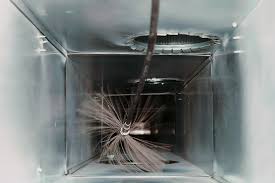
Agitation of Duct Walls: Technicians use rotary brushes and compressed air tools to loosen and dislodge debris from duct surfaces, from the main trunk down to individual branch lines.
Component Cleaning: Coils, drain pans, and the air handler unit are cleaned separately, as these are common sites for biological growth.
Sanitization (When Needed): If mold or bacterial contamination is confirmed, the interior surfaces are treated with EPA-registered antimicrobial agents.
Final Inspection and Documentation: A reputable contractor documents findings and provides before-and-after reporting, especially important for commercial properties and insurance purposes.
Residential vs. Commercial HVAC Duct Cleaning: Key Differences:
The fundamentals are the same, but the scale and compliance requirements are very different.
Residential duct systems are typically single-zone and relatively straightforward. The cleaning process usually takes 3 to 5 hours for an average home.
Commercial HVAC systems serve larger, multi-zone buildings with more complex configurations—rooftop units, chilled water systems, dedicated outdoor air systems, and more. Commercial duct cleaning must also account for OSHA air quality standards and NADCA compliance and often requires documentation for tenant or building code purposes.
Steamatic handles both residential and commercial HVAC air duct cleaning with certified technicians and the industrial equipment required to do the job correctly at any scale.
The Connection Between Duct Cleaning and Property Restoration:
One thing that surprises many property owners: HVAC duct cleaning is often a critical step in a full restoration project—not a separate service.
After water damage, for example, moisture enters the duct system through flooded areas. If the ducts aren’t cleaned and dried properly, mold colonizes the interior and continues spreading even after the visible water is gone.
After a fire or smoke event, soot and smoke particles circulate through the entire ductwork—making HVAC cleaning a non-negotiable part of fire restoration. After major wind or storm events that force debris into the system, duct cleaning protects equipment and air quality simultaneously.
This is why Steamatic’s HVAC and air duct cleaning services are integrated into the broader restoration framework—because the duct system connects every part of a building, and treating it in isolation after a major event leaves work unfinished.
FAQ About HVAC Air Duct Cleaning:
Q1. How Much Does It Cost for Air Duct Cleaning?
Air duct cleaning typically costs between $300 and $700 for an average home, depending on the size of the property, the number of vents, and the level of dust or debris buildup. Homes with pets, recent renovations, or heavy contamination may require more extensive cleaning.
Professional air duct cleaning can improve indoor air quality, reduce allergens, and help your HVAC system run more efficiently. For the most accurate pricing, request an inspection and estimate from a trusted local air duct cleaning company.
Q2. How can I find reliable air duct cleaning services near me?
To find reliable air duct cleaning services near you, look for companies with strong customer reviews, industry certifications, and transparent pricing. Check platforms like Google Reviews and ask if they use professional HVAC cleaning equipment.
A reputable air duct cleaning company should provide a detailed inspection, explain the cleaning process, and offer a written estimate before starting work. Choosing an experienced local provider helps ensure better indoor air quality and long-lasting results.
Q3. How long does it take?
For an average home, a thorough professional HVAC duct cleaning takes 3 to 5 hours. Larger homes or commercial properties may take a full day or multiple visits. The process should never be rushed.
Q4. How to clean air ducts at home?
You can clean air ducts at home by removing vent covers, vacuuming visible dust and debris, and wiping the vents with a damp cloth. Replace your HVAC air filter regularly to help prevent buildup and improve indoor air quality.
While basic maintenance can reduce dust, deep air duct cleaning often requires professional equipment to remove contaminants hidden inside the ductwork. For best results, consider scheduling professional air duct cleaning every few years.
Clean Ducts Are Not a Luxury—They’re Part of Property Maintenance:
The air inside your home or business cycles through your duct system dozens of times every day. What’s in those ducts goes everywhere—into lungs, onto surfaces, and into equipment. HVAC air duct cleaning isn’t about being fastidious; it’s about maintaining the one system that touches every corner of a building.
Steamatic has provided professional HVAC and air duct cleaning services for residential and commercial properties since 1968. Whether it’s routine maintenance, post-construction cleanup, or cleaning that’s part of a larger restoration project, our certified technicians bring the equipment and expertise to do it right.
Contact your local Steamatic team to schedule an inspection or request HVAC air duct cleaning service.