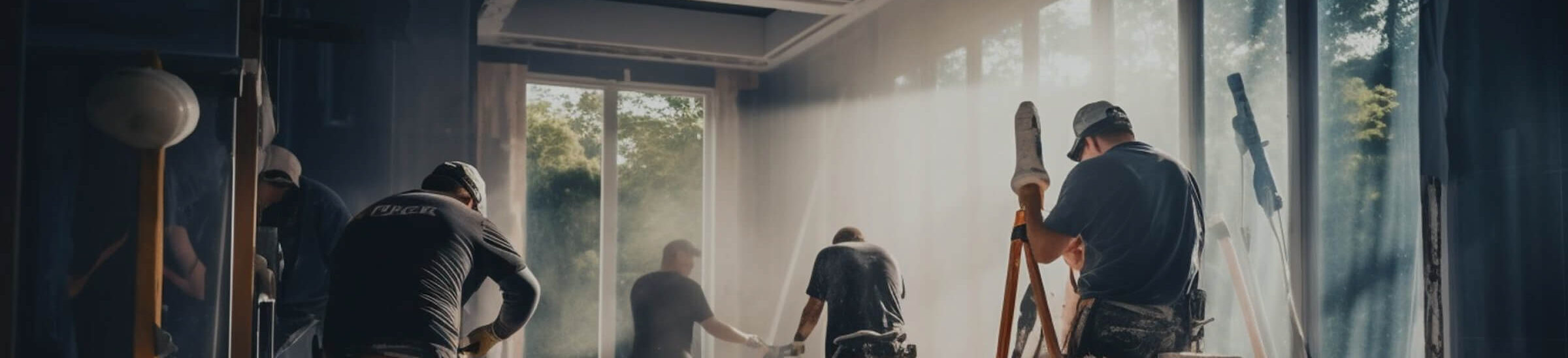
Water shows up fast. One minute it is a quiet Tuesday; the next you are staring at a spreading ceiling stain or a puddle racing across hardwood. Because water damage restoration service is time-sensitive, people often jump into ‘fix it now’ mode without a plan. Here is the good news: there are smart, safe steps you can take while you wait for a professional water remediation company to arrive. The goal is not to finish the job—it is to slow the damage, protect your health, and set up your water damage cleanup and full water damage mitigation for the smoothest possible recovery.”
Here’s the good news: you can do a few smart, safe steps while you wait for help from a water damage remediation company. The goal is not to “finish the job.” It’s to prevent the damage from getting worse, protect your health, and set up the pros (or your insurer) for a smoother recovery. Water claims are common, too: Policygenius reports that many insured homes filed a water damage claim (2016–2020).
Water Damage Safety First — What to Check Before Touching Anything:
1) Electricity and Water — The First Hazard to Assess
If water is near outlets, cords, a breaker panel, or ceiling fixtures, don’t step in it. Shut off power only if you can do it without standing in water. If that’s not possible, wait for a qualified professional.
2) What Category of Water Are You Dealing With? Clean, Grey, or Black
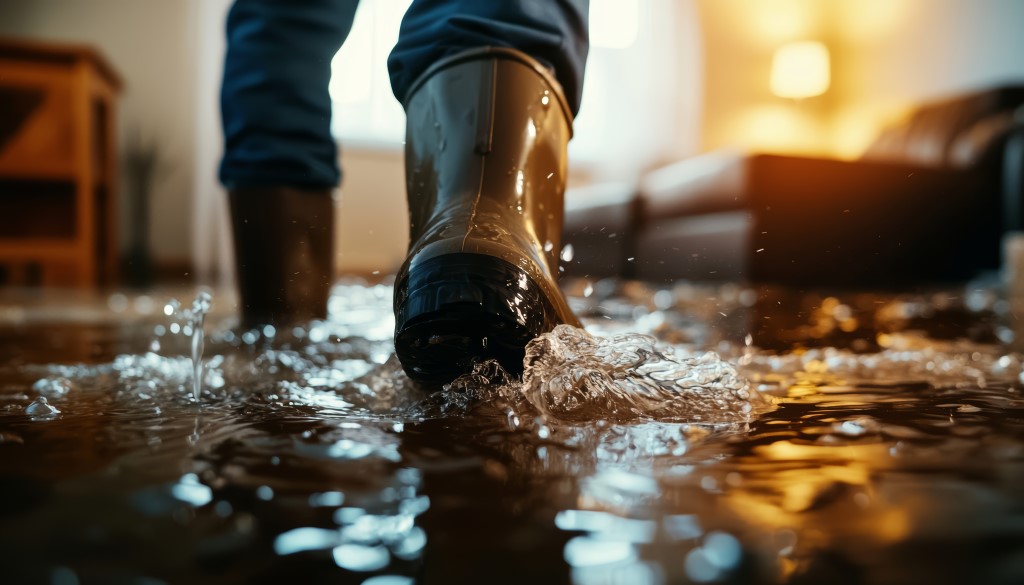
Not all water is “clean.” If it’s from a dishwasher leak, it might be manageable. If it’s from a backed-up drain, sump overflow, or storm-related intrusion, treat it as contaminated and avoid contact.
3) Protect Your Health—Mold Can Start Within 24–48 Hours
Mold is not a “later problem.” FEMA guidance notes mold growth can start on damp surfaces within 24–48 hours.
If you smell mustiness or see fuzzy spots, wear gloves and an N95, and don’t start tearing into walls.
DIY Water Damage Cleanup — What You Can Safely Do in the First Hour:
Stop the source (when it’s safe)
If it’s a supply line leak, turn off the nearest shutoff valve. If you can’t find it, shut off the main water valve. If the leak is from an appliance, shut it off and unplug it only if the area is dry and safe.
Document everything before you start moving things:
This is boring, but it matters. Take photos and a quick video of:
Where the water started
The rooms affected
Close-ups of damaged items
It helps with claims and with any water remediation services team that needs a clear timeline.
Remove small amounts of standing water:
If the water is clean and shallow:
Use towels, a mop, or a wet/dry vacuum (never a regular vacuum).
Move quickly, but don’t overdo it if you’re dealing with heavy water volume.
If water is significant, spreads across multiple rooms, or may be contaminated, pause and wait for a water remediation company.
Start drying the right way (without “baking” the damage)
The EPA’s mold guidance is straightforward: dry wet/damp materials within 24–48 hours when possible, and you greatly reduce the chance of mold growth.
Practical steps:
Open windows if outdoor humidity is lower than inside.
Run fans to move air across (not directly into) wet areas.
Run your AC/dehumidifier if your home can do so safely.
Avoid cranking heat way up. Heat can speed evaporation, but without proper dehumidification, it can also push moisture deeper into materials.
Save what you can, but don’t spread contamination
Move dry valuables away from wet zones. For wet items:
Lift furniture legs onto small blocks or foil to prevent stains.
Pull area rugs up only if they’re not heavy or soaked.
Don’t stack wet items together (that traps moisture).
FEMA’s post-flood guidance notes that porous materials wet for more than 48 hours may need to be discarded.
Where DIY Stops—What Professional Water Damage Mitigation Delivers:
Professionals follow a real standard, not guesswork
The ANSI/IICRC S500 standard outlines professional water damage restoration procedures and precautions, including documentation, safety, drying science, and contamination risk management.
In plain English: pros aren’t just “drying.” They’re measuring, controlling, and proving dryness.
Moisture hides where you can’t see it
Water can wick behind baseboards, under flooring, and into wall cavities. Pros use moisture meters and thermal tools to find hidden wet areas, then dry them with controlled airflow and dehumidification (not just a box fan and hope).
Category 2/3 water changes everything
If water is potentially contaminated, the approach shifts to containment, safe removal, and cleaning protocols. That’s one reason calling a qualified water damage remediation company early can prevent secondary damage and health risks.
When to Call a Water Remediation Company Immediately:
Don’t “wait and see” if any of these are true
Call a professional water remediation company right away if:
water touched electrical systems or ceilings
you have sewage/dirty water, sump overflow, or storm intrusion
water has been sitting longer than a few hours
you see swelling floors, buckling, or sagging drywall
you smell mustiness (early mold indicator)
multiple rooms are affected
Insurance and Water Damage — What’s Covered and What Isn’t:
Many homeowners are surprised to learn what’s excluded. The NAIC explains that flood damage is typically not covered under standard homeowners policies, while certain plumbing/roof leaks often are. This is another reason your photos, timeline, and early mitigation steps matter.
How to Choose a Water Damage Restoration Service — Questions That Separate Good Providers From Great Ones:
Once you have decided to call a professional water damage restoration service, choosing the right water remediation company determines both the quality of your restoration and the outcome of your insurance claim. Not all providers deliver equal results—and the differences matter most in how they measure and document work.
What to look for:
- IICRC certification — specifically Water Damage Restoration Technician (WRT) and Applied Structural Drying (ASD). These are the certifications that insurance adjusters recognise and trust
- 24/7 genuine emergency availability—a water damage remediation company that cannot respond within 2–4 hours is not a true emergency provider
- Moisture measurement protocols — ask specifically how they verify dryness. Calibrated moisture meters and thermal imaging are the standard; “looks dry” is not acceptable
- Daily moisture logs for your insurance adjuster — this documentation is what moves claims from open to settled without disputes
- Full-scope management — confirm they manage the complete sequence from water extraction through water damage cleanup, structural drying, and rebuild. Providers who hand off after mitigation create coordination gaps
Questions to ask every candidate:
- Are your technicians IICRC WRT and ASD certified?
- How do you measure moisture levels inside wall cavities?
- Do you provide daily drying logs to insurance adjusters?
- Do you manage the full water damage restoration service sequence or only the mitigation phase?
Your insurer may suggest preferred vendors, but you have the right to choose any certified water remediation company that follows IICRC standards and provides industry-standard documentation.
FAQs: DIY vs. Pro Water Damage Restoration:
Q1) How long do I have before mold becomes a real risk?
Mold can begin growing quickly. FEMA notes mold growth can start on damp surfaces within 24–48 hours, so drying fast is the priority.
Q2) Can I use fans alone for drying?
Fans help, but they mainly move air. If materials are soaked, humidity is high, or moisture is trapped under floors/walls, fans alone often can’t remove enough water. That’s where professional water remediation services and dehumidification make a big difference.
Q3) Should I tear out wet drywall or flooring myself?
Only if the water is clean, the affected area is small, and you’re confident it’s safe (no electrical risk, no contamination). If water may be dirty or the damage is widespread, stop and call a water damage remediation company to avoid spreading contaminants and mold spores.
Q4) What should I do immediately after water damage before the restoration team arrives?
Before help arrives, you can safely turn off the main water supply to stop further flooding, cut power to affected areas if it’s safe to do so, remove standing water using mops or buckets, and move valuables or furniture to dry areas. Avoid using electrical appliances in wet zones, and do not try to remove or dry out walls yourself—that requires professional equipment to prevent mold growth.
Q5) Why is professional water damage restoration necessary? Can’t I just dry everything myself?
While surface drying might seem enough, water seeps deep into walls, subflooring, and insulation, where it stays hidden and causes mold within 24–48 hours. Professionals use industrial dehumidifiers, moisture meters, and thermal imaging to detect and remove hidden moisture that household fans simply can’t reach. DIY drying often leads to structural damage and costly mold remediation down the line.
Steamatic’s IICRC-certified water damage restoration service teams provide 24/7 emergency water extraction, professional water damage mitigation, and complete water damage cleanup across the United States — including Texas, Florida, Tennessee, Indiana, Kansas, New Mexico, Wisconsin, Colorado, California, and beyond. Whether you need immediate emergency response for a burst pipe or comprehensive water remediation services following storm flooding, your nearest water remediation company is available around the clock.”
Final Thoughts:
DIY can absolutely help in the first hour, but it’s not the same as full water damage restoration. Your job is to make the situation safer, slower, and smaller. A qualified water damage remediation company handles the hard part: detecting hidden moisture, drying cor
Water damage discovered right now? Don’t wait — mold starts within 24 hours and every hour of delay expands your restoration scope. Steamatic’s certified water damage restoration teams respond 24/7. Call at (817)332-1575– immediately Request Emergency Water Damage Restoration →