

Water can wreck a home in hours and turn your week upside down. One small supply-line leak, failed sump pump, or overflowing washer can soak drywall, flooring, and belongings before you even know there’s a problem. Then comes the second wave of stress: figuring out insurance, documenting everything, and choosing a water damage restoration company you can actually trust.
If you’re a homeowner, small landlord, or condo owner, the stakes are high. Water damage and freezing account for nearly 28% of all home insurance claims, and the average claim often lands in the five-figure range. Just one inch of water in your home can cause up to $25,000 in damage.
This guide walks you step-by-step through the insurance claim process so you know what to do first, how to talk to your insurer, and how to work with restoration professionals without losing control of the claim.
Step 1: Make Your Home Safe and Stop the Water
Before you think about paperwork, protect people and prevent more damage.
Shut off the main water supply if a pipe, appliance, or fixture is involved.
If water is near outlets or electrical panels, turn off power to the affected area and avoid standing water.
Move valuables, electronics, and important documents out of the wet zone if it’s safe to do so.
For older homes or basements that flood often, know where your water shutoff is and consider installing leak detectors or water sensors near risk areas like water heaters, washing machines, and HVAC units.
Step 2: Document the Damage Before Anything Moves
Insurance adjusters need proof. Your future self will thank you for slowing down here.
Take clear, date-stamped photos and short videos of:
Every affected room, from multiple angles
Close-ups of damaged materials (baseboards, drywall seams, warped flooring)
Contents: furniture, rugs, electronics, artwork, and personal items
Don’t forget “boring” but powerful shots: water lines on walls, open cabinets showing saturation, and any ceiling stains. If you have high-value finishes or collections, capture labels, serial numbers, or appraisals as well.
Keep a simple log: time discovered, what you observed, and any immediate actions taken (shut off valve, called plumber, etc.). This helps show the damage was “sudden and accidental,” which is a key standard for many policies.
Step 3: Review Your Policy With a Highlighter
Before you call the insurer, open your policy (or online account) and look for:
“Perils insured against” for water damage and freezing
Exclusions for long-term leaks, groundwater, and sewer backup
Special limits or sublimits for water damage
Your deductible and any higher “water” or “escape of water” deductibles
Water damage and freezing claims are among the most common and expensive for home insurers, with average claim severity around $13,954 in recent years. That’s why some policies quietly cap water damage payouts or require higher deductibles. Knowing your limits before you start the claim helps you ask better questions and avoid surprises.
If you’re in a flood-prone area, remember that standard homeowner’s insurance usually excludes flood. Separate flood insurance (often via the National Flood Insurance Program) is what covers rising water from rivers, storm surge, or heavy rainfall pooling.
Step 4: Call Your Insurer and Line Up a Restoration Expert
Now you’re ready to report the loss. When you call your insurer:
Describe what happened in simple, factual language:
“We discovered a burst supply line under the kitchen sink at 6:30 a.m. today. Water spread into the kitchen, dining room, and part of the basement.”
Ask for a claim number, the adjuster’s contact info, and written guidance about emergency mitigation.
Most carriers actually expect you to prevent further damage. That’s where a qualified water damage restoration contractor comes in.
Look for a team that:
Has technicians trained to IICRC standards (the industry standard for water damage restoration and drying science)
Uses moisture meters and thermal imaging, not just “looks dry” tests
Provides detailed estimates and drying logs you can share with the adjuster
National providers such as Steamatic have decades of experience handling water, fire, and mold claims, which can make coordination with insurers more efficient while keeping homeowners informed at every step.
Step 5: Prepare for the Adjuster Visit
Think of the adjuster visit as a professional walk-through where you’re the guide.
Before the visit:
Make a room-by-room list of visible damage.
Print or organize photos and videos by area.
Have any plumber or contractor reports ready.
During the visit:
Walk the adjuster through the full path of the water, not just the obvious areas.
Point out hidden risks (behind cabinets, under flooring, inside closets).
Ask how they plan to handle both structural drying and content damage.
This is also a good time to reference the scope from your water damage restoration company so the adjuster understands why certain materials (like wet drywall or saturated insulation) must be removed rather than just “dried in place.”
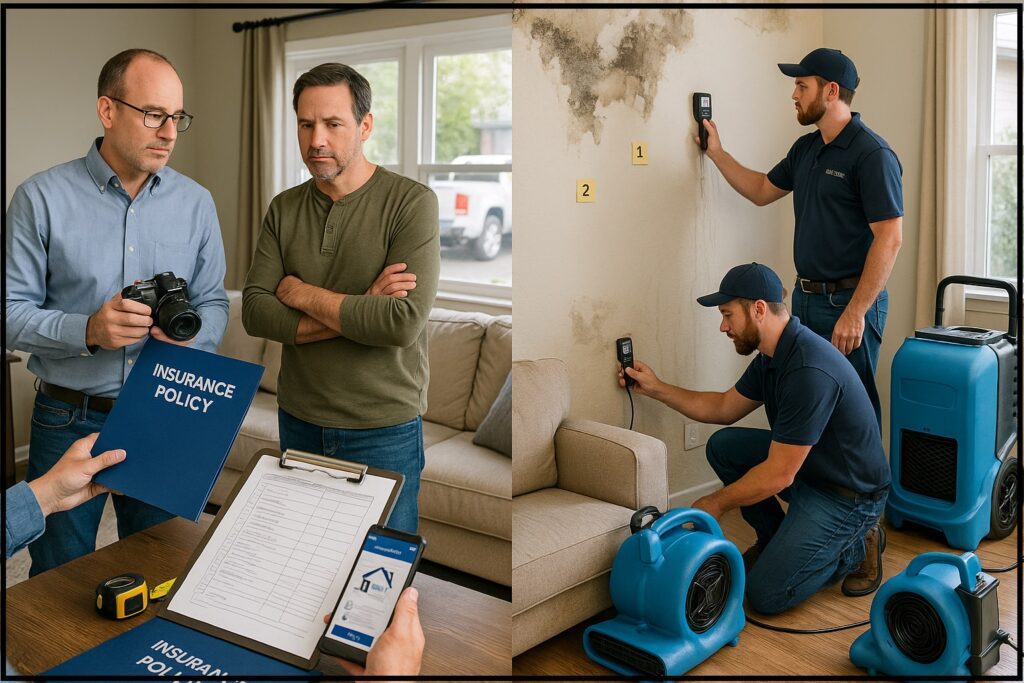
Step 6: Oversee Water Damage Restoration and Repair
Once your claim is approved, you’ll move from emergency mitigation into full water damage restoration and repair. This phase includes:
Removing unsalvageable materials (drywall, carpet pad, warped wood)
Structural drying with dehumidifiers and air movers
Cleaning and sanitizing surfaces to reduce mold risk
Rebuilding: new flooring, baseboards, paint, and finishes
Stay organized:
Keep all invoices, change orders, and receipts (including temporary housing or lost-rent documentation if you’re a landlord).
Track what’s paid by the insurer vs. what you’ve paid out of pocket.
Confirm, in writing, how depreciation and recoverable depreciation will be handled.
A solid water damage restoration partner should provide clear documentation and final reports you can share with your insurer as proof the work was completed correctly.
When Water Damage Insurance Claims Get Denied or Delayed:
Sometimes claims get partially denied, underpaid, or stuck in back-and-forth emails. This is common with:
Long-term slow leaks
Disputes over whether damage is “flood” vs. “wind-driven rain”
Older homes where pre-existing damage is an issue
If that happens, you can:
Ask for a detailed written explanation of the denial.
Provide additional photos, expert opinions, or contractor reports.
Consider consulting a public adjuster or attorney for large or complex losses.
Remember, you’re not required to accept the first offer if it doesn’t fully address the scope of proven damage.
FAQs: The Insurance Claim Process for Water Damage:
Q1. Should I call my insurance company or a restoration contractor first?
If there’s active water, call a qualified water damage restoration company quickly to stop damage and begin mitigation, then notify your insurer as soon as it’s safe. Most policies require you to prevent further damage, and insurers typically accept reasonable emergency work as part of the claim.
Q2. How can I find reliable water damage restoration services near me?
To find reliable water damage restoration services near you, look for companies with strong reviews, 24/7 emergency response, proper licensing, and experience handling insurance claims. Choosing a trusted team that also understands water damage restoration can help ensure fast, professional recovery for all types of property damage.
Q3. Does standard homeowners insurance cover flood damage, or do you need a separate policy?
This is one of the most important—and most misunderstood—distinctions in home insurance. Standard homeowners insurance does not cover flooding caused by external water sources: rising rivers, storm surge, heavy rainfall pooling in your yard, or overflowing municipal drains. To be covered for these events, you need a separate flood insurance policy—most commonly through the National Flood Insurance Program (NFIP), which is administered by FEMA, or through private flood insurers. The confusion arises because water damage from internal sources (a pipe burst, an appliance failure) is typically covered under standard homeowners policies, while the exact same amount of water entering from outside is not. If your basement floods during a heavy storm, whether the claim is covered can come down entirely to which direction the water came from. If you live in a flood-prone area—or even a neighborhood that has experienced more intense rainfall in recent years—reviewing whether your standard policy is sufficient and whether a separate flood policy is worth adding is a conversation worth having with your insurer before the next weather event.
Q4. Do I have to use the contractor my insurance company recommends?
No. You can choose your own water damage restoration contractor. Your insurer may suggest preferred vendors, but you have the right to work with any properly licensed and insured professional who will follow industry standards and provide documentation for the claim.
Final Thoughts:
Dealing with water damage is stressful, but a clear plan helps you protect your home, your finances, and your peace of mind. If you document early, read your policy carefully, communicate clearly with your insurer, and partner with a trusted water damage restoration company, the process becomes much more manageable. Keep this guide handy so the next time water shows up where it shouldn’t, you already know your next step.