Ask most people what a restoration company does and you’ll hear the same answer: they dry out basements. That’s not wrong. It’s just the one part of the job the public ever sees. Anyone sizing up a disaster restoration franchise on that basis is working from an incomplete picture of what the work involves.
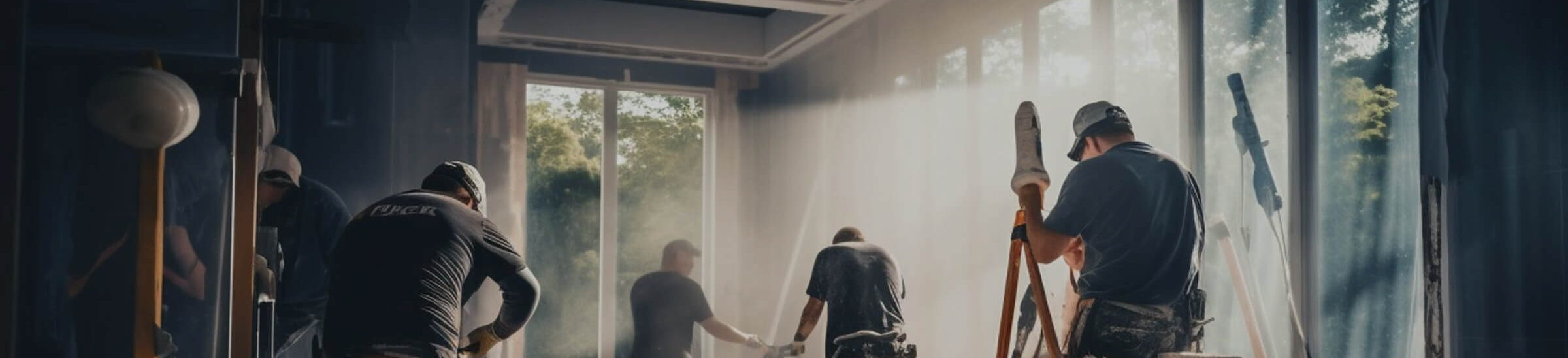
The real scope runs wider. One operation might be extracting water on Monday, packing out a smoke-damaged house on Tuesday, and running mold containment in a commercial kitchen by Thursday. Those aren’t variations on one job. The equipment is different, the certifications are different, and so is the clock.
That mix is the business. It decides how an owner staffs, how jobs get scheduled, and how fast money arrives. It’s also why two operators in the same territory, running what looks like the same company, can end up with very different books at the end of the year.
Disaster Restoration Work Beyond the Water Trucks:
Water and storm response
Water is the volume driver. Water damage restoration jobs arrive constantly: a failed supply line, a backed-up drain, a January freeze. They move fast, usually days from first call to final moisture reading. Storm and wind work is the same skill set on a different schedule, arriving in bursts that turn a quiet week into weeks of backlog.
Fire, smoke, and odor
Fire jobs look nothing like water jobs. Smoke settles into surfaces flame never touched, so the cleaning scope is often larger than the burn area. Contents get packed out, cleaned off site, stored, and returned. Odor is separate again. ANSI/IICRC S700, the fire and smoke damage restoration standard, covers residues and odors across the structure, its HVAC, and its contents. In the field that means thermal fogging, hydroxyl generators, and ozone. Operators running the broader fire and water restoration franchises carry gear and technicians for both.
Mold, contents, and specialty recovery
Mold remediation needs containment, negative air, and its own certification. Then come the lines many competitors subcontract: electronics decontamination, textile and upholstery restoration cleaning, art recovery, and document recovery. Freeze-drying, which the National Archives prefers for salvaging water-damaged paper, saves records otherwise written off.
Why the Job Mix Decides the Economics:
Across 2019 to 2023, Triple-I puts water damage and freezing at 1.50 claims per 100 insured house-years, averaging $15,400. Fire and lightning runs at 0.23 claims, averaging $88,170. Multiply those out and the streams land closer than the frequency gap suggests: about $23,100 of insured loss per 100 homes a year from water, $20,300 from fire. Those are whole-claim figures, not mitigation invoices, but the ratio shows where a disaster restoration franchise earns:
- Frequent water and storm jobs keep crews busy and cash moving
- Fire and commercial losses carry bigger tickets but tie up people far longer
Which is why a fire damage restoration franchise can bid jobs a water-only competitor passes on.
There’s also a timing problem neither number shows. Carrier payment on a large file runs in months, so a fire job sits unpaid long after completion. The steady water work isn’t filling the calendar, it’s funding payroll while everyone waits.
What Full-Scope Capability Actually Costs:
The equipment list grows unevenly with the scope. Air movers, dehumidifiers, and moisture meters earn their keep because water jobs arrive weekly. Ultrasonic tanks, ozone units, and HEPA gear bought for fire might run a few times a quarter. The gear that wins big jobs sits idle waiting for them, so most owners phase it in.
Certifications stack the same way, from IICRC water and structural drying credentials through fire, odor, microbial, and contents work. A disaster recovery franchise needs those spread across a crew, not stacked in one person who might quit in March. Staffing: a certified core, scalable labor for surges, and a project manager whose paperwork gets jobs paid.
The Kind of Operator This Rewards:
This isn’t a passive asset. The owners who do well like logistics and don’t flinch at arguing a line item with an adjuster. A disaster recovery franchise is a dispatch business wearing a trade uniform.
Frequently Asked Questions:
Q1. Is water damage still most of the work?
By job count, almost always. By revenue it’s closer than people expect: one large fire can outweigh a run of water jobs.
Q2. Do all restoration brands cover the full scope?
No. Plenty are water-first with the rest subcontracted. When comparing any property restoration franchise opportunity, ask which disciplines are handled in-house.
Q3. How long does a fire job actually take?
Weeks are normal, months aren’t unusual. That’s why fire and water restoration franchises need crews that can hold a long job and still answer new calls.
Final Thoughts:
Water is the front door, not the whole house. What sits behind it runs on longer clocks and bigger tickets, and handling it separates an operation that takes what its territory sends from one that turns work away.
So the real question isn’t territory size, it’s which disciplines you could run in it. If you’re weighing a property restoration franchise opportunity, Steamatic’s franchise site is where that conversation starts.