
Most people think of mold as a bathroom inconvenience. The reality is more expensive—and more commercially interesting—than most entrepreneurs ever investigate. Mold is one of the fastest-growing property damage categories in the United States, driven by climate volatility, aging housing stock, and flood events that are both more frequent and more destructive than a generation ago.
For entrepreneurs evaluating which service business to build, a mold remediation franchise sits at a rare intersection: demand that requires no marketing to create, high average job values, and a professional market where certified operators are genuinely scarce in most regions.
This is not a trend. It is physics—water and humidity produce mold, and the United States has plenty of both.
Nobody Has to Be Talked Into Calling You:
Mold remediation does not require convincing customers they have a problem. They called because the problem had already found them—a flooded basement, a leaking roof, a burst pipe discovered two days late. The EPA notes that mold begins colonizing wet materials within 24 to 48 hours of water exposure. By the time most homeowners smell it, the contamination has spread well beyond what a weekend project fixes.
Mold damage cleanup is also insurance-driven in a way most service categories are not. The Insurance Information Institute reports that water damage and freezing account for nearly 28% of all homeowners insurance claims annually.
A significant share of those events produce downstream mold work—jobs that adjusters refer directly to certified contractors on their approved lists. When you hold those relationships, the phone rings without outbound sales effort. Adjusters do not search for a qualified operator at 9 AM on Monday after a weekend flood. They call the contractor they already trust.
Why the Unsexy Reality Is the Competitive Moat:
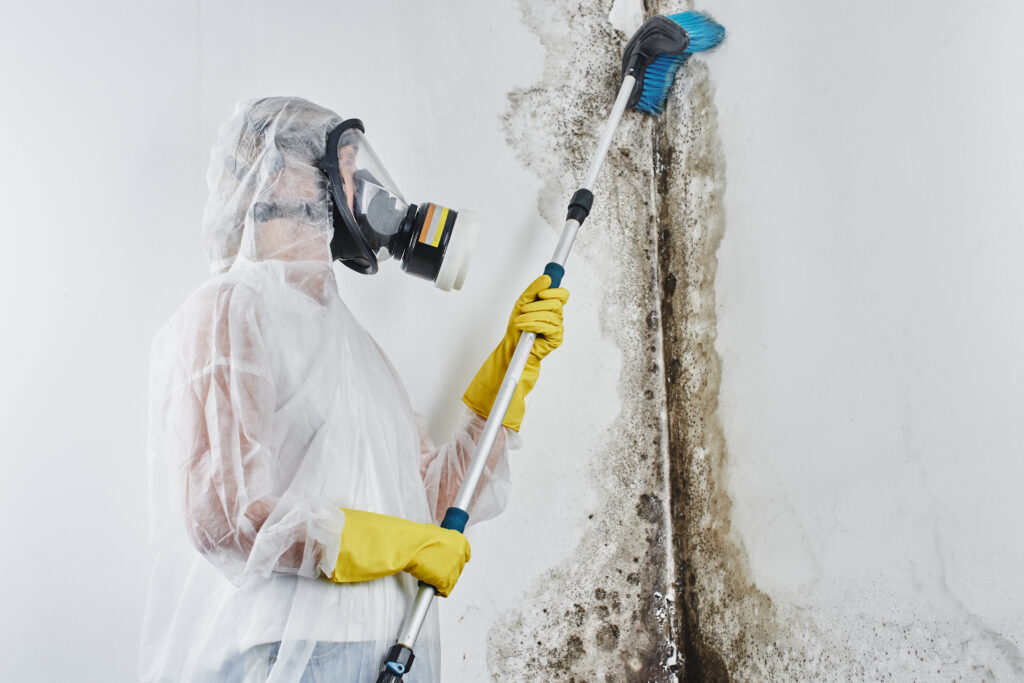
Here is what most entrepreneurs miss when they evaluate this category: nobody wants to do mold work. The PPE is uncomfortable, job sites are unpleasant, and documentation requirements are genuinely demanding. That is exactly the point. Because most people avoid it, competition in the certified professional tier stays far thinner than in more appealing trades.
IICRC S520 certification creates a real barrier to entry. Insurance adjusters and property managers will not engage contractors without professional documentation—which filters out informal operators running bleach spray and a box fan. For any established mold damage restoration business with full IICRC credentials, the competitive field is narrower than most operators expect walking in.
Job values make the economics work. A contained single-room remediation runs $1,500 to $3,500. Whole-house events following flooding routinely reach $15,000 to $25,000 when reconstruction is included. A single large commercial loss—a school wing, a medical facility after a roof failure—can represent significant monthly revenue from one project alone.
Houston Is Not a Market. It is a case study:
Every mold remediation company in TX operating along the Gulf Coast understands something operators in drier climates do not: demand here is not seasonal. It is baseline. Subtropical humidity stresses buildings year-round, independent of weather events.
When Hurricane Harvey dropped more than 60 inches of rain on parts of the Houston metro in August 2017, the remediation backlog stretched past 18 months. Certified operators were fully booked. Mold cleanup Houston projects from that one storm generated multi-year work streams for operators who had the systems and staff ready—and nothing for operators who lacked capacity when the calls started.
That pattern repeats after every major weather event. Long-term commercial relationships built through mold remediation in Houston—with property managers, facilities directors, and insurance carriers—produce referral pipelines that stay active long after the news coverage ends.
The Mold Remediation Franchise Advantage Is Not the Brand. It Is the First Year:
Going independent into mold work is possible. Going in with a franchise system behind you compresses the learning curve in ways no logo can replicate. Containment design, air sampling protocols, disposal documentation, adjuster communication, and reconstruction coordination—the operational complexity is precisely where independent operators break down early.
The pattern recurs consistently: a new independent operator makes documentation errors on early jobs, disrupts payment cycles, loses adjuster trust, and spends the following year rebuilding. The franchise operator who started the same month had approved documentation templates, pre-existing adjuster relationships, and a support line available at 7 PM on a live job site. That first-year gap shapes most of what follows.
Frequently Asked Questions:
Q1: Is mold remediation a good business to start in 2026?
Yes—particularly in high-humidity and flood-prone markets. Demand is structural rather than cyclical, average job values are strong, and IICRC certification limits casual competition. Insurance-backed payment cycles and high referral rates from adjusters and property managers make it one of the more predictable service business categories available.
Q2: How to prevent mold after a flood?
To prevent mold after a flood, remove standing water fast, dry all wet areas within 24–48 hours, use fans and dehumidifiers, and clean surfaces with mold-safe disinfectants. Remove damaged carpet, drywall, and insulation if they stay wet.
For serious flooding, hire a professional water damage restoration company to stop hidden moisture and mold growth.
Q3: How do I find the best mold removal company near me?
To find the best mold removal company near me, look for certified technicians, strong local reviews, clear pricing, emergency service, and proven mold inspection experience. Choose a company that handles moisture detection, safe mold removal, cleanup, and prevention so the problem does not return.
Q4: How long does mold remediation usually take?
Mold remediation usually takes 1–5 days, depending on the mold growth, affected area, moisture level, and damage severity. Small mold issues may be fixed quickly, while larger problems may need inspection, containment, removal, cleaning, and full drying to prevent mold from coming back.
Final Thoughts:
Mold damage cleanup as a business is not glamorous—and that is exactly why it holds. The work is necessary, customers are already motivated, insurance infrastructure supports reliable payment, and most competition lacks the credentials to operate at the same level as a trained, certified operator.
In markets like Houston, demand is not speculative. The real question is whether your systems can handle the volume when every phone rings at once.