

Florida non-renewed 3.35% of homeowners policies in 2024 — the highest rate in the country, roughly 1.7 times its 2018 level. For a restoration operator, that number has a specific meaning: a burst pipe in a non-renewed home doesn’t produce an insurance-funded job. California was close behind at 3.18%, nearly four times its own 2018 rate. Both figures come from Weiss Ratings’ analysis of NAIC market conduct filings.
That’s the smaller shift, though. The larger one is structural, and it happened with little public notice — carriers dismantled their in-house vendor-management departments and handed the function to third-party administrators. Industry analysis in Restoration & Remediation states it plainly: there are effectively no carrier-run managed-repair programs left, and access to majors like USAA, Nationwide, or MetLife now runs through a TPA.
For anyone weighing restoration franchises against building independently, that’s the development that matters. The gatekeeper changed, and the qualifications changed with it — away from equipment and technical skill, toward credentialing, documentation discipline, and the administrative capacity to sustain both.
Premiums Up, Coverage Down, Claims Handling Tighter:
Premiums and deductibles rose together. Carriers raised premiums across 95% of the U.S. between 2021 and 2024, per the Consumer Federation of America, and deductible restructuring followed — notably percentage-based wind and hail deductibles, where 2% on a $400,000 home means $8,000 before a carrier pays anything. Non-renewals turned hyper-local, with carriers shifting from state-level risk models toward ZIP-code-level assessment. Claims handling tightened alongside: the Insurance Information Institute has documented managed repair networks operating across most major U.S. personal lines carriers.
Why Vendor Programs Now Decide Who Gets Dispatched:
When a loss gets reported, the carrier’s TPA increasingly assigns the contractor — the homeowner isn’t choosing. More than a dozen active TPAs operate here, the largest being Contractor Connection, Alacrity Solutions, Sedgwick, and Code Blue. TPA-managed work already accounts for up to a third of revenue at some restoration firms.
Getting onto those rosters means clearing a credentialing bar that typically includes:
- Licensure and IICRC certification, with the Water Damage Restoration Technician credential as the usual baseline
- General liability commonly at $1 million per occurrence and $2 million aggregate
- Workers’ compensation and commercial auto coverage
- Bonding, a clean complaint history, and demonstrated geographic capacity
The compliance cost that scales badly
Programs score contractors on response time, estimate accuracy, cycle time, and satisfaction. Top performers hold satisfaction above 95% and response times under 30 minutes, and receive 40–60% more assignments for it. Miss a window and the job can go elsewhere. Hitting those marks takes administrative labor. Writing in Restoration & Remediation, a former program restorer described hiring admin help purely to stay compliant with program timelines — overhead that exists to satisfy paperwork rather than dry buildings.
That function behaves like a fixed cost. A one-truck operator needs roughly the same documentation discipline as a five-crew operation but spreads it across a fraction of the revenue. Compliance overhead is regressive, and scale is what makes it survivable.
Program Work Pays Faster and Worse:
Carriers used their consolidated leverage to squeeze contractors — negotiating scopes downward, deferring once-standard line items, lengthening payment cycles — until program work became barely profitable for many firms. The Restoration Industry Association reports that contractors with direct carrier relationships average margins 12 to 18% higher than those working exclusively through TPAs.
Higher deductibles squeeze from the other direction. A $3,500 water loss under a $5,000 deductible never enters the claims system; it becomes self-pay or deferred.
So the picture is mixed. Program access buys volume without marketing spend and faster direct billing; it costs margin, pricing control, and independence from a gatekeeper that can change terms with little warning.
Where Branded Operators Have the Edge:
Given that trade-off, the strongest position is neither all-in on programs nor entirely outside them — it’s holding both channels open. Program work fills the schedule; direct, brand-driven work carries the margin. When a homeowner asks for a company by name, the TPA system gets bypassed entirely.
That’s the structural case for a restoration company franchise in 2026. A disaster restoration franchise typically arrives with the credentialing package, documentation systems, and brand recognition to run both channels from day one. An independent usually has to choose — build the compliance apparatus for program work, or build brand awareness for direct work — because a young revenue base rarely funds both at once.
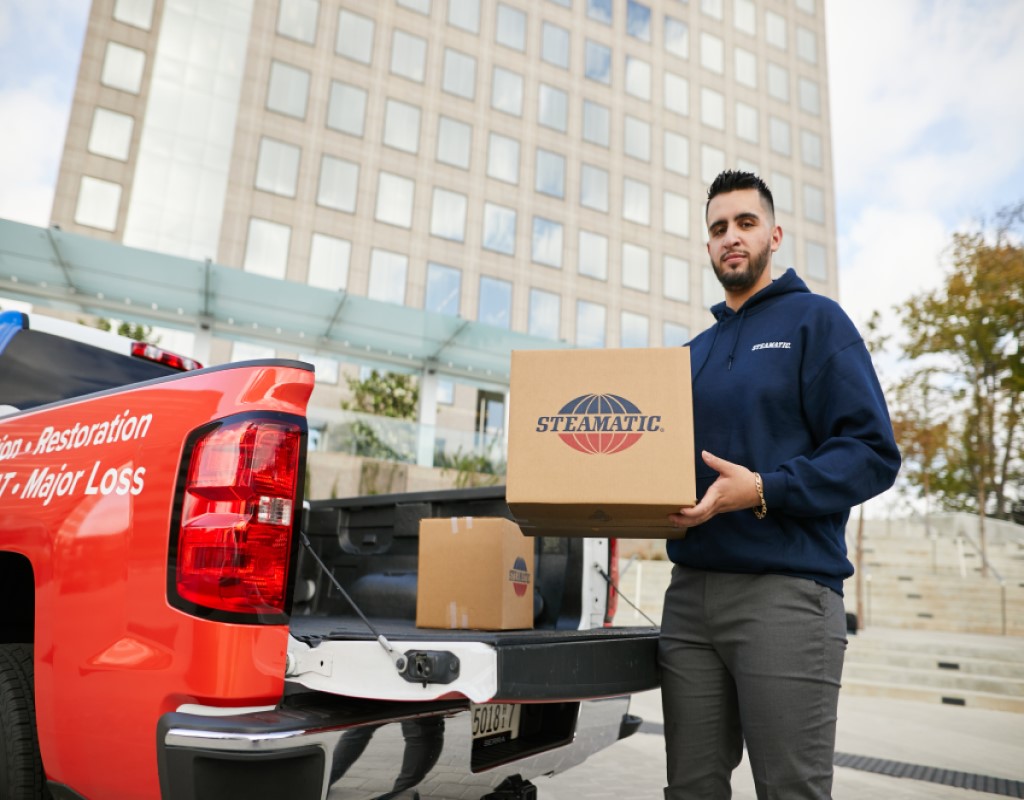
Steamatic’s restoration and cleaning services cover water, fire, mold, and contents recovery, and the Steamatic network supplies name recognition the direct channel depends on. Press hardest on which specific programs and territories come with a restoration franchise opportunity — those answers sit in the disclosure documents and the franchise ownership information, and they belong in the first conversation, not the last.
FAQs:
Q1. Can an independent contractor join carrier vendor programs?
Yes. The barriers are credentialing, insurance limits, and capacity, not brand affiliation. Assembling them alone just takes longer.
Q2. Is program work worth the thinner margin?
Depends on the alternative. Steady assignments without marketing spend beat idle crews, but leaning on programs for most of your revenue concentrates real risk.
Q3. Should I avoid territories where carriers are pulling back?
Not automatically. Those areas still generate damage — but more of it falls outside standard coverage, into surplus-lines policies, state plans, or no coverage at all. Check the payer mix before committing to a territory.
Q4. Are rising deductibles bad for restoration businesses?
They shrink the small-claim pool and push insured work toward larger, program-routed losses. The job mix shifts more than total demand does.
Final Thoughts:
The insurance market now decides who gets restoration work through vendor rosters and compliance scores — administered by intermediaries the carriers themselves created. That rewards operators with credentialing depth and enough administrative capacity to keep two revenue channels running, which is the practical argument for restoration franchises in this cycle.
Before committing either way, get three numbers: which programs a brand actually participates in, what the documentation burden costs to staff, and how margin splits between program and direct work. Those tell you more about the business than any projection will.